The sand clam (scientific name: Ruditapes philippinarum; Chinese name: 花甲, 沙蛤), also known as the Philippine clam, is widely distributed in the intertidal zones and shallow coastal waters of East Asia and is an important economically significant bivalve.
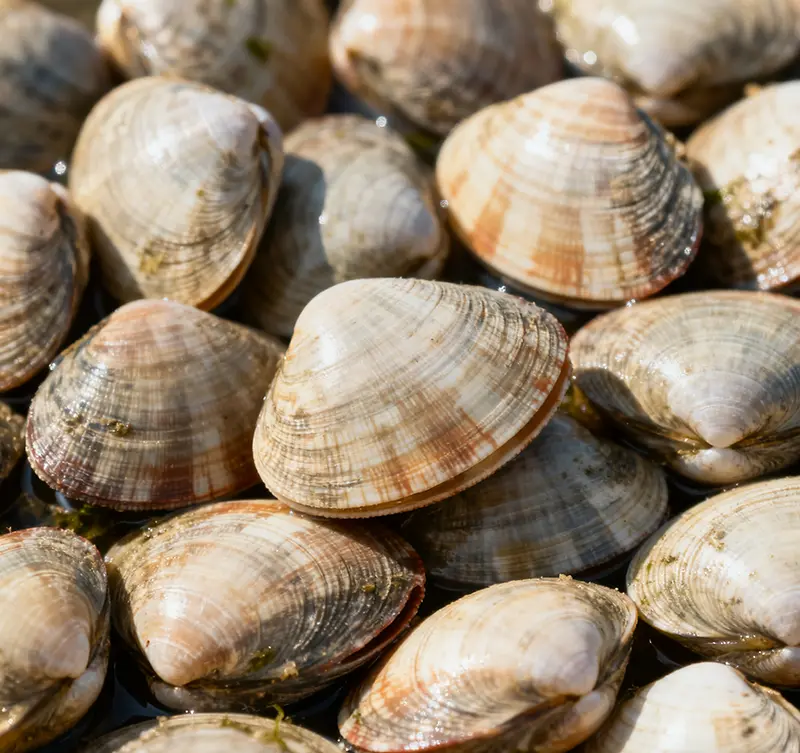
The shell of the sand clam is oval or triangular in shape, with a thick, sturdy structure. The shell length of adult individuals typically ranges from 2.5 to 4 centimeters, with the largest recorded specimen reaching 5.5 centimeters. The umbo is slightly protruding, located slightly forward of the center of the dorsal surface, with the lunule and escutcheon clearly visible. The shell surface features dense radial ribs and concentric growth lines; the number of radial ribs ranges from 50 to 70, intersecting with the growth lines to form a grid-like pattern. Shell coloration is diverse, typically grayish-yellow, yellowish-brown, or grayish-white, often bearing dark spots or banded patterns. Compared to the hard clam, the sand clam has a thicker and heavier shell with denser radial ribs; compared to the green clam, the sand clam's shell shape is more triangular, and its umbo is more prominent.
The soft body of the sand clam primarily consists of the foot, mantle, gills, digestive system, and gonads. The foot is well-developed and tongue-shaped, serving as the primary organ for digging through sand and mud. The mantle margin is thick and possesses sensory functions. The gill lamellae are well-developed and serve not only for respiration but also as the primary filter-feeding organs. The digestive system includes the mouth, stomach, intestine, and digestive glands; the intestine is relatively long and coiled. Compared to the razor clam, the foot of the sand clam is shorter and stouter, resulting in weaker digging ability; compared to the oyster, the soft body of the sand clam is more plump, yielding a higher meat yield.
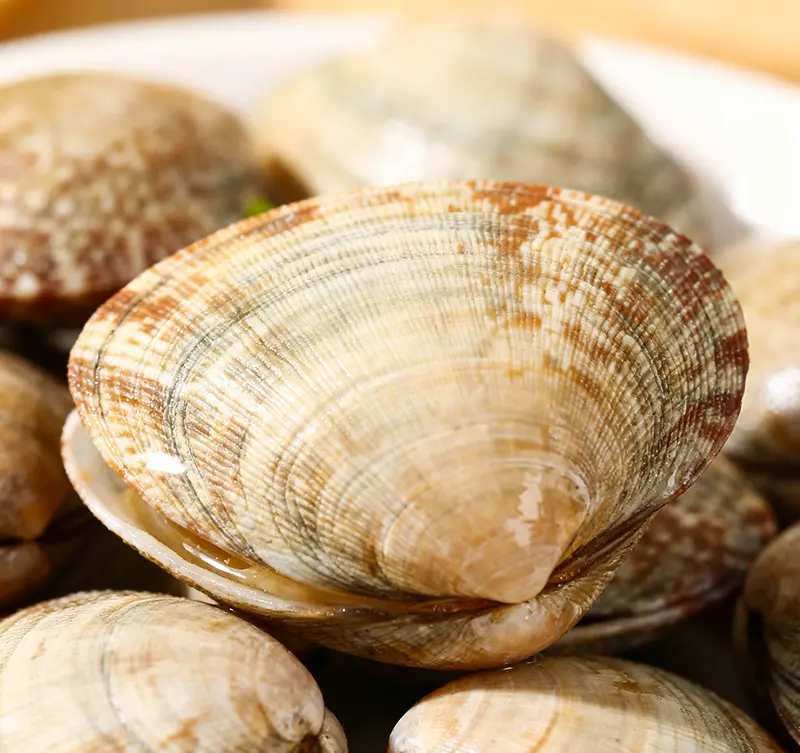
The sand clam possesses two well-developed siphons (incurrent and excurrent), the openings of which are equipped with tentacles and sensory papillae capable of detecting changes in the surrounding environment. At the base of the foot, there are byssal glands that secrete byssal threads for temporary attachment to the substrate. The edge of the mantle secretes nacre, which is used to repair damaged shells. Compared to abalone, the sand clam has weaker mobility; compared to scallops, the sand clam lacks the ability to swim actively but burrows more quickly.
The sand clam is primarily distributed along the coastal regions of East Asia, including China, Japan, and South Korea. It typically inhabits fine sandy or sandy-muddy seabeds ranging from the intertidal zone to depths of 10 meters. The optimal water temperature is 15–25°C, with a salinity of 20–30‰, and it exhibits strong tolerance to low-oxygen environments. It typically burrows 2–5 centimeters into the substrate, leaving only its siphons exposed at the surface for respiration and feeding. Unlike the blood clam, which prefers muddy bottoms, the sand clam favors sandy bottoms; compared to the hard clam, the sand clam has greater tolerance to freshwater influx and can thrive in estuarine areas.
The sand clam is a typical filter-feeding bivalve that uses the movement of its gill cilia to filter single-celled algae, organic detritus, and micro-organisms from seawater. It can filter 1–2 liters of seawater per minute, with feeding rates influenced by water temperature, tides, and food density. Unlike oysters, which filter-feed while attached to a substrate, the sand clam can move to select feeding sites; compared to other small clams, the sand clam is more selective regarding algal size, preferring food particles ranging from 2 to 10 micrometers.
The sand clam is predominantly dioecious, with the breeding season primarily occurring in late spring to early summer (May–July) when water temperatures are around 20°C. Fertilization is achieved by releasing sperm and eggs into the seawater; a single adult sand clam can produce 200,000–500,000 eggs at a time. Fertilized eggs undergo the trochophore and veliger larval stages, followed by settlement and metamorphosis approximately 2–3 weeks later. It grows relatively quickly, reaching market size (2.5 cm) in 6 months, becoming sexually mature in 1 year, and typically living for 2–3 years. Compared to abalone, the reproductive period of the sand clam is more concentrated; compared to scallops, the sand clam has a shorter larval stage but a higher settlement success rate.
The meat of the sand clam is tender and flavorful, with a protein content of approximately 10–12% and a fat content of less than 1%, making it a typical high-protein, low-fat food. It is rich in taurine (150–200 mg per 100 g) and amino acids such as glycine, and is known to help lower cholesterol and protect the liver. In terms of minerals, it is particularly high in iron and zinc; its iron content is twice that of beef, and its zinc content meets over 30% of the daily requirement. Compared to oysters, the sand clam has lower cholesterol levels; compared to razor clams, the sand clam offers a more balanced profile of trace elements.
The meat of the sand clam is tender and has a sweet, fresh flavor, making it suitable for a variety of cooking methods. The most common preparation is stir-frying; high-temperature, rapid heating causes the shells to open while keeping the meat tender and smooth. It is also ideal for soups, imparting a rich umami flavor to the broth. In Korean cuisine, it is commonly used as an ingredient in seafood pancakes, while in Japanese cuisine, it is often steamed with sake or simmered in miso. Compared to the hard clam, the meat of the sand clam is more tender and crisp; compared to other small clams, the sand clam has a more intense umami flavor but contains more sand. It is important to note that it should not be cooked for too long, as the meat will become tough and chewy; the optimal cooking time is 30 seconds after the shells open.
When consuming sand clams, please note the following: First, they may carry pathogenic bacteria such as Vibrio parahaemolyticus, so they must be thoroughly cooked before eating; second, they may accumulate shellfish toxins (such as diarrhetic shellfish toxins), so consumption should be avoided during red tide events; third, they may accumulate heavy metals (such as cadmium and lead), so choose products from less polluted regions. In certain protected areas (such as intertidal nature reserves), the harvesting of wild sand clams is prohibited; consumers should choose farmed or legally harvested products.
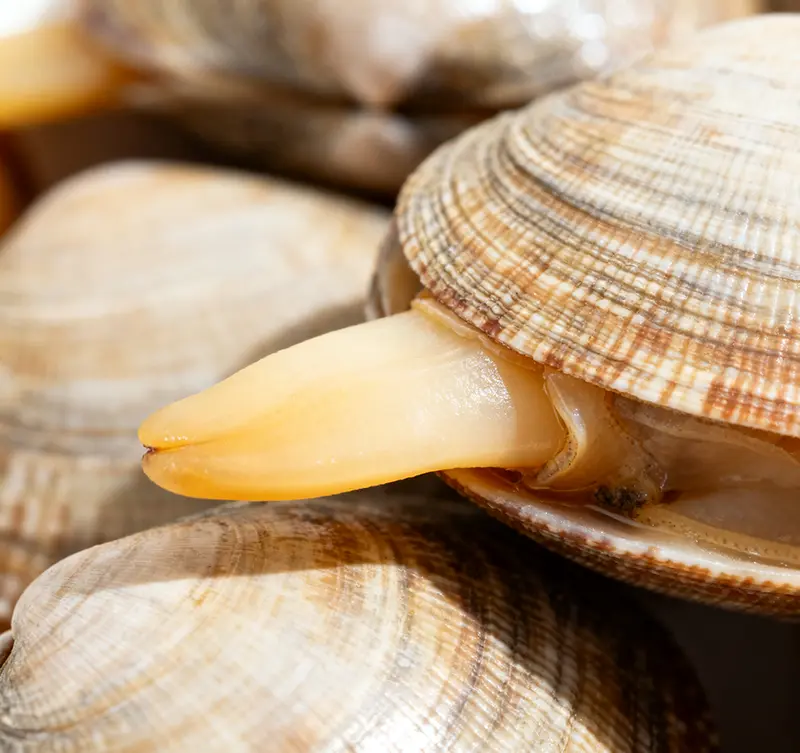
Common sand clam species in the Chinese market include: the Philippine clam (Ruditapes philippinarum, shell length 3–4 cm, 50–70 radial ribs), the variegated clam (Ruditapes variegata, mottled shell color, finer and denser radial ribs), and the Chinese clam (Ruditapes sinensis, rounder and thicker shell). Distinguishing by appearance: the Philippine clam has a yellowish shell with regular radial ribs; the variegated clam has a mottled shell with dark spots between the ribs; the Chinese clam has a thicker shell with a more prominent umbo.
Common species often confused in the market include: the hard clam (Meretrix meretrix), the green clam (Cyclina sinensis), and certain species of small clams. Key identification points: the true sand clam has a more triangular shell shape and denser radial ribs; the hard clam has a rounder, thicker shell with coarser radial ribs; the green clam has a bluish-gray shell with more distinct concentric growth lines. There is a significant price difference: high-quality sand clams cost 20–30 yuan per kilogram, while hard clams typically cost more than 50% higher. In processed products, genuine sand clam meat is orange-yellow and has a distinct adductor muscle; counterfeit products often use other small clam species as substitutes, resulting in inferior texture and flavor.
The harvesting season for wild sand clams varies by region: along China's coast, the main fishing seasons are in spring and autumn (March–May and September–November); in Korean waters, quality is best in winter (December–February); while in Japan, they are primarily harvested in spring. Farmed sand clams are available year-round, but the optimal time for consumption remains winter, when the meat is at its most succulent and glycogen accumulation is highest. Compared to seafood such as crabs, which have distinct peak and off-peak seasons, the quality of sand clams fluctuates less. However, sand clams during the breeding season (summer) have a poorer flavor and softer texture.
Sand clams have a short survival time out of water and require strict preservation conditions: live transport must be kept moist and at low temperatures (5–10°C); shucked clam meat must be flash-frozen (-40°C). Traditional preservation methods include salting, drying, and pickling. Modern preservation techniques, such as low-temperature dormancy transport, can increase survival rates to over 90%. Consumers should note the following when purchasing: live sand clams have a sensitive shell-closing reflex and close rapidly when touched; fresh clam meat is pale yellow with a natural luster; frozen products should be well-packaged with no excessive ice crystals. Home storage recommendations: live sand clams can be stored for 2–3 days in a moist environment at 5–10°C; frozen at –18°C, they can be stored for 3 months.
The sand clam plays a vital role in coastal ecosystems: as a filter feeder, it helps purify water (a single adult can filter up to 20 liters of water per day); it provides food for wading birds and bottom-dwelling fish; and its empty shells serve as habitats for other organisms. Due to overharvesting, wild populations have declined; for example, wild sand clam resources in some coastal regions of China are now only 30% of what they were in the 1980s. Conservation measures include establishing closed seasons, setting minimum harvest sizes, conducting restocking programs, and developing marine ranches. MSC certification promotes sustainable development, and sand clam fisheries in South Korea and other regions have already obtained certification.
Sand clam aquaculture primarily employs methods such as bottom seeding in tidal flats and pond cultivation. China is the world's largest producer of sand clams, with an annual output exceeding 1 million tons, mainly concentrated in the coastal regions of Fujian, Shandong, and Liaoning. Technical challenges include seedling propagation (low larval metamorphosis rates), pest control (particularly against crabs and snails), and quality control. In recent years, ecological farming models have been developed, involving the mixed cultivation of sand clams with shrimp, sea cucumbers, and other species to enhance overall economic benefits. Compared to oyster farming, sand clam farming requires a more suitable substrate environment; compared to scallop farming, sand clams have a shorter growth cycle and offer a faster return on investment.
The sand clam holds an important place in East Asian culinary culture: in China, it symbolizes "wealth and good fortune" and is a common dish at banquets; in Korea, it is the main ingredient in hangover soup; and in Japan, it is a key ingredient in miso soup. The global sand clam industry has an annual output value exceeding $2 billion, with the primary consumer markets located in East Asia. Processed products include frozen clam meat, canned goods, seasoned sauces, and extracts (such as seafood seasonings). Compared to high-end seafood such as abalone and sea cucumber, sand clams are more affordable and appeal to a broader consumer base.
As a significant economic bivalve, the biological characteristics and economic value of the sand clam warrant in-depth exploration.
From a morphological perspective, the grid-patterned shell and well-developed foot are the most distinctive features of the sand clam, while the dual-siphon system plays a crucial role in its benthic lifestyle. In terms of ecological habits, the sand clam exhibits strong environmental adaptability and can survive in various substrate types, though it thrives best in sandy-muddy seabeds. Regarding edible value, its low-fat, high-protein meat is rich in various amino acids and trace elements; however, attention must be paid to food safety and the legitimacy of its source. Although species diversity is not as rich as in other shellfish, sand clams from different regions vary in quality and flavor. Regarding seasonality, although advances in aquaculture technology have made sand clams available year-round, wild populations still exhibit distinct seasonal variations in quality. Resource conservation is becoming increasingly important, as overharvesting and coastal development have posed threats to wild populations. Advances in aquaculture technology offer new opportunities for industry development, but seedling propagation and disease control remain challenges. Culturally, the sand clam holds an important place in East Asian culinary traditions, and its economic value continues to grow in the shellfish market.
In the future, a balance must be sought between sustainable resource utilization, aquaculture innovation, and market development to ensure the sustainable use of this important bivalve resource.
References:
Morphological data: Fauna of China—Mollusca, Bivalvia
Ecological Habits: Multiple studies in the Journal of Shellfish Research
Nutritional Composition: Standard Edition of the Chinese Food Composition Tables
Aquaculture Techniques: Relevant studies in the Journal of Fisheries Sciences of China, 2010–2022
Resource Status: FAO Annual Fisheries Statistics
Economic Data: China Fisheries Statistical Yearbook
Rapana venosa in a Changing Marine Environment
Home Back to ColumnScallop Essentials: Shell Form, Living Behavior, Taste, Types, and Peak Seasons
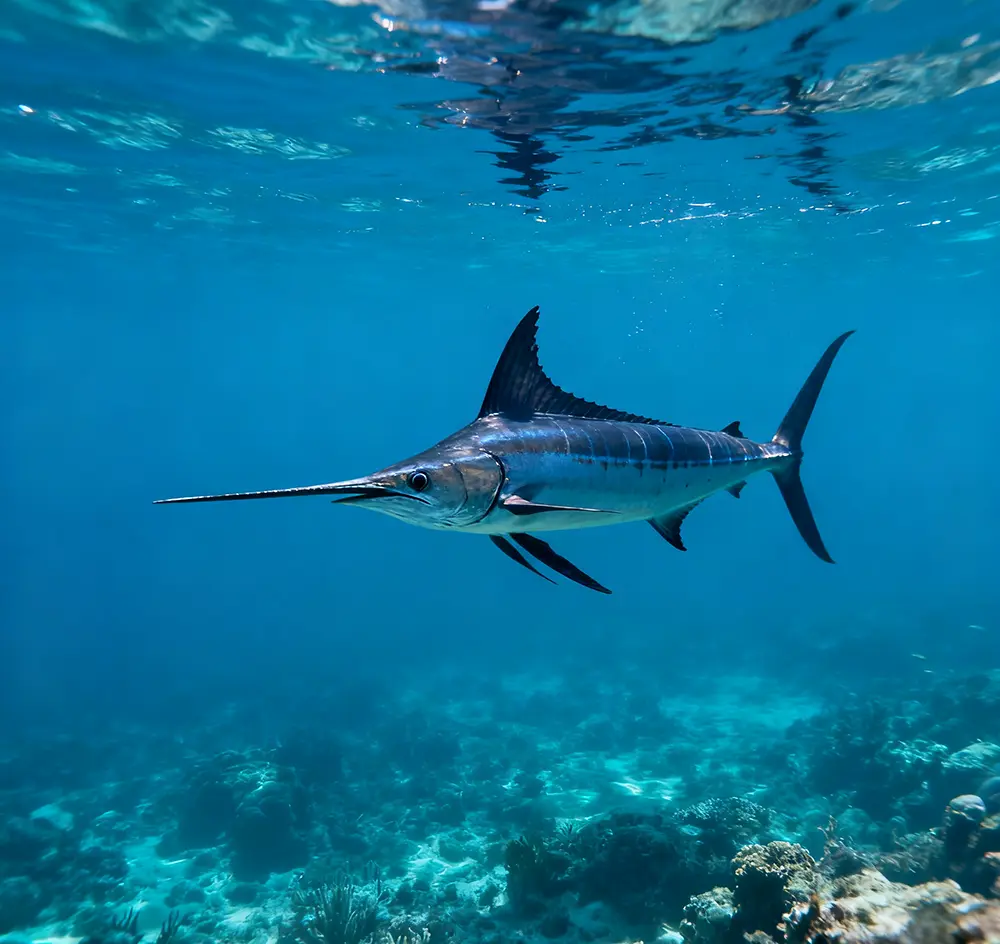 Swordfish: The Silver Blade of the Ocean
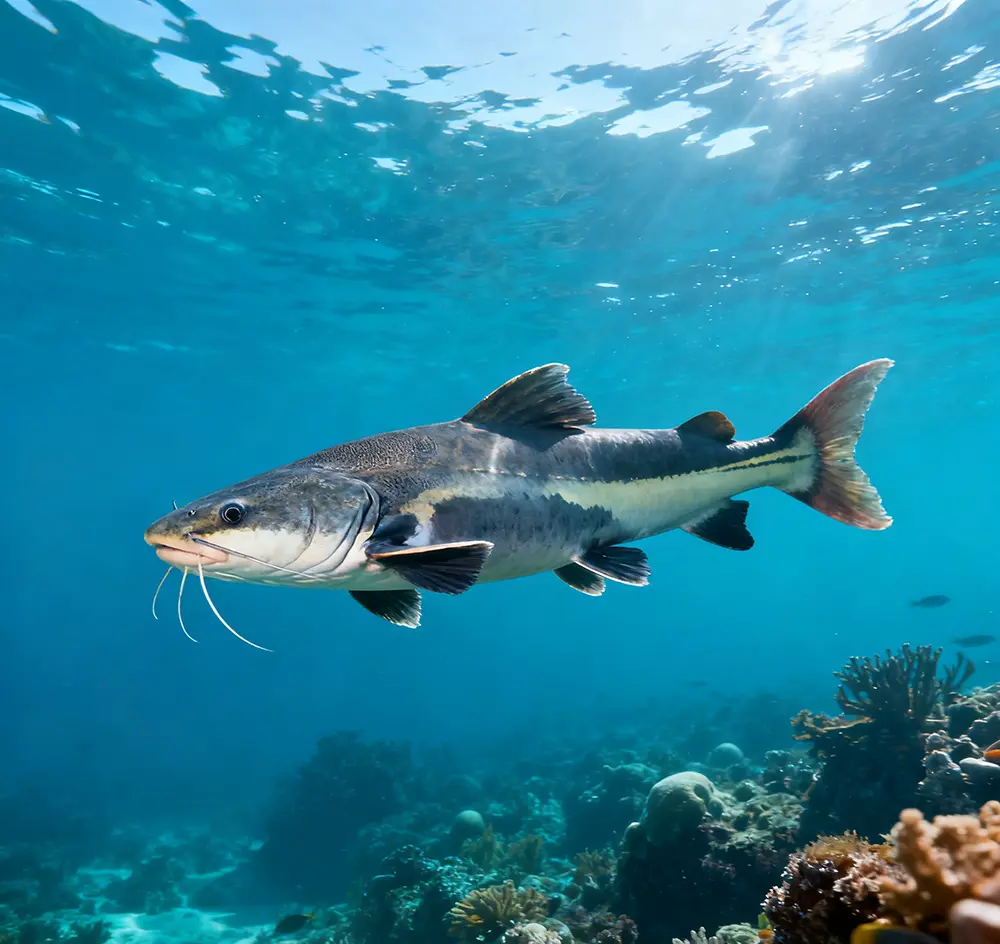 Hardhead Catfish Decoded: Morphology, Habits, Edible Value, Varieties, and Timing
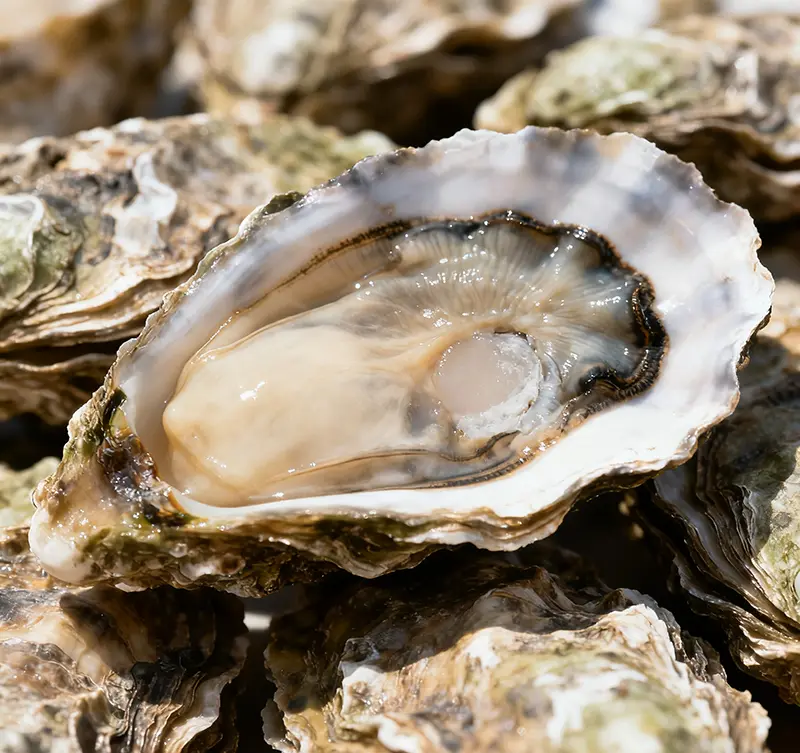 Oysters: Living Filters of the Ocean
 On the Bamboo Clam: Morphology, Burrowing Habits, Edible Value, Species Diversity, and Seasonal Occu
 Comprehensive Study of the Giant Tiger Prawn (Penaeus monodon) in Indonesian Waters
Comprehensive Study of the Giant Tiger Prawn (Penaeus monodon) in Indonesian Waters
Oysters: Living Filters of the Ocean
Oysters: Living Filters of the Ocean
 A Comprehensive Analysis of the Indonesian White Prawn (Penaeus merguiensis)
A Comprehensive Analysis of the Indonesian White Prawn (Penaeus merguiensis)
4The Black Clam: An Ecological Guardian of Freshwater Environments
5Rapana venosa in a Changing Marine Environment
6Turbo cornutus: A Multifaceted Investigation
7The White Clam Breakdown – Morphology → Habits → Edibility → Varieties → Season
8What’s Hard Clam? Shape, Flavor, Types, and the Right Time to Eat
9From Beach to Bowl: Understanding the Sand Clam
10On the Bamboo Clam: Morphology, Burrowing Habits, Edible Value, Species Diversity, and Seasonal Occu