Current location:首页 > Fish > The Atlantic Halibut (Hippoglossus hippoglossus): From Benthic Biology to Seasonal Cuisine
The Atlantic halibut (scientific name: Hippoglossus hippoglossus; Chinese name: 大西洋鲽鱼), also known as the Atlantic flatfish(大西洋庸鲽) or giant flatfish(巨型比目鱼), is primarily found in the cold waters of the North Atlantic. It is a large, demersal fish species of significant commercial importance.
The Atlantic halibut exhibits typical flatfish characteristics, with an extremely laterally compressed, elongated oval body. Adult individuals average 1–1.5 meters in length, with the largest recorded specimen reaching 4.7 meters and weighing up to 320 kilograms. The most distinctive feature is that both eyes are located on the right side of the body, with the left side forming the ventral surface, allowing the fish to live in close contact with the seabed. The mouth is large and slanted upward, and both the upper and lower jaws are equipped with sharp teeth, suitable for capturing larger prey. The dorsal and anal fins are extremely long, almost encircling the entire body, while the caudal fin is fan-shaped. The body surface lacks scales but is covered with tiny bony tubercles, giving it a rough texture. Compared to the Pacific halibut (Hippoglossus stenolepis), the Atlantic halibut has a broader, thicker body, a larger head relative to its size, and typically darker coloration.
The Atlantic halibut possesses a remarkable ability to change color. The ocular side (right side) is typically deep olive-green to brownish, dotted with irregular dark spots, and can alter its color and pattern within seconds to match the seabed environment; the blind side is pure white or grayish-white. During the juvenile stage, both eyes are still positioned on opposite sides, and the body coloration is symmetrical. After metamorphosis, the left eye gradually migrates to the right side, and the body coloration becomes asymmetrical. This camouflage ability stems from the synergistic action of pigment cells (melanophores, xanthophores, and iridophores) in the skin. Compared to the European plaice (Pleuronectes platessa), the Atlantic halibut changes color more rapidly and exhibits a wider range of color variations.
The Atlantic halibut has evolved several adaptations for benthic life: a flattened body reduces water resistance; both eyes on one side enhances stereoscopic vision; a well-developed lateral line system detects faint water currents and vibrations; and a specialized gill chamber structure allows for efficient oxygen exchange while stationary. The liver accounts for about 5% of body weight; rich in oil, it provides buoyancy regulation and energy reserves. Compared to the common sole (Solea solea), the Atlantic halibut is a stronger swimmer, capable of short, rapid bursts of speed for hunting.
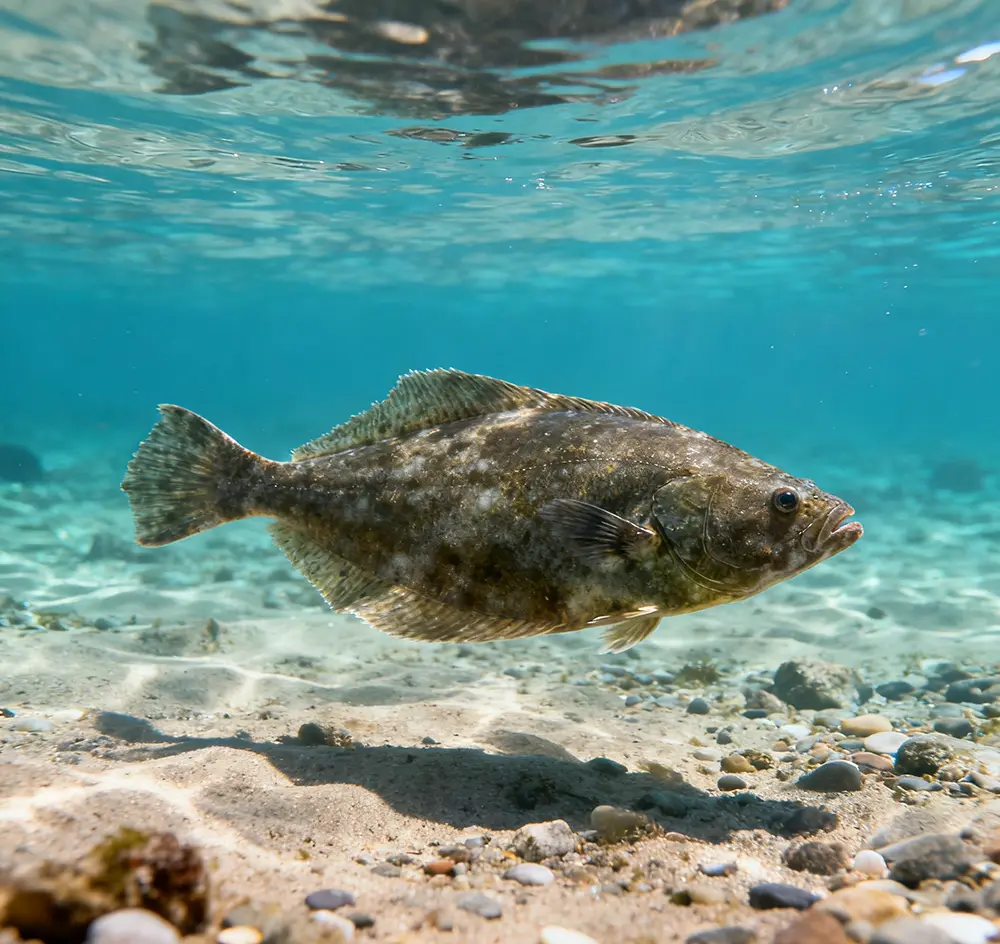
The Atlantic halibut is distributed along both coasts of the North Atlantic, ranging from New Jersey, USA, to Greenland on the western side, and from the Bay of Biscay to the Barents Sea on the eastern side. Its habitat depth range is extremely broad; juveniles typically inhabit shallow waters between 50 and 200 meters, while adults can dive to depths of 2,000 meters. It prefers sandy-muddy bottoms with water temperatures of 3–8°C and often burrows partially into the substrate to ambush prey. It exhibits distinct seasonal vertical migration, rising to shallower waters in summer and descending to deeper waters in winter. Compared to the Greenland halibut (Reinhardtius hippoglossoides), the Atlantic halibut prefers warmer waters and has a relatively lower latitudinal distribution.
The Atlantic halibut is a ferocious carnivore. Juveniles feed on small crustaceans and polychaetes, but once they exceed 30 cm in length, they switch to a piscivorous diet, preying on herring, cod, squid, and even small sharks. Its hunting strategy is unique: it buries itself in the substrate with only its eyes exposed, then suddenly lunges to suck its prey whole into its large mouth. Its daily food intake can reach 3–5% of its body weight, and it can swallow prey up to one-third of its own body length. Compared to the starry flounder (Platichthys stellatus), the Atlantic halibut prefers larger, energy-rich prey.
The Atlantic halibut spawning season runs from December to April, with spawning occurring at water temperatures of 4–7°C. Females have a very high fecundity; a 1.5-meter-long individual can produce 2–4 million eggs, each measuring approximately 3–4 mm in diameter. The eggs are buoyant and disperse with ocean currents. The incubation period lasts approximately 16–20 days. After a planktonic stage of about six months, the larvae settle and undergo metamorphosis. Growth is slow, with sexual maturity reached only after 5–7 years (at a body length of about 1 meter), and they can live up to 50 years. This K-selection strategy (fewer offspring with higher investment) results in weak population resilience, in stark contrast to the prolific stone flounder (Kareius bicoloratus).
Atlantic halibut has snow-white, tender flesh with a high protein content (18–20 g per 100 g) and moderate fat content (2–5 g). It contains approximately 0.3–0.8 g of omega-3 fatty acids (EPA + DHA), which are beneficial for cardiovascular health. It is rich in vitamin D (100 grams provides 200% of the daily recommended intake) and selenium (an antioxidant), and also has a high potassium content. The liver is particularly prized, containing three times the amount of vitamin A found in cod liver. Compared to farmed salmon, wild Atlantic halibut accumulates fewer contaminants but has a lower omega-3 content.
Due to its firm texture and resistance to falling apart, Atlantic halibut is suitable for a variety of cooking methods: thick-cut steaks are ideal for grilling or pan-frying (such as traditional Norwegian grilled halibut); whole fish steamed to preserve its natural flavor; the flesh can also be served as sashimi (known as "ohyo" in Japan). The flavor is mild and slightly sweet, with evenly distributed fat, pairing perfectly with seasonings such as cream, lemon, and dill. In Iceland, fermented halibut (hákarl) is a traditional delicacy; in France, it is often prepared with white wine (a luxurious alternative to sole meunière). Compared to the arrowtooth halibut (Atheresthes stomias), Atlantic halibut has a more delicate texture and a richer, more aromatic flavor.
Due to overfishing, several Atlantic halibut populations are endangered, and the species is listed as Endangered by the IUCN. The EU, Norway, Canada, and other regions enforce strict quotas and minimum size limits (typically requiring caught individuals to exceed 80 cm). Commercial fishing is prohibited in US waters, with only limited recreational catches permitted. Consumers should choose MSC-certified products and avoid catches taken during the spawning season (winter). Unlike the yellowtail flounder (Limanda ferruginea), whose populations remain relatively stable, commercial fishing for Atlantic halibut is strictly regulated worldwide.
There are numerous species of flatfish, with those of high economic value including: Atlantic halibut (the largest), Pacific halibut (lighter in color), Greenland halibut (left-eyed), and Greenland halibut (Reinhardtius hippoglossoides, slender in shape). Species commonly referred to as "halibut" in the market also include the California halibut (Paralichthys californicus) and others. Key identification features: the Atlantic halibut has a distinctly curved lateral line above the pectoral fin and a concave caudal fin; the Pacific halibut has a straighter lateral line and a more slender body.
Species that are easily confused include: European plaice (smaller, with orange spots), lemon sole (Microstomus kitt, yellowish in color), and common sole (more oval in shape). There is a significant price difference: Atlantic halibut can cost $30–50 per kilogram, while European plaice is only $5–10. Key identification points for processed products: genuine halibut has thick, firm flesh with distinct muscle layers; substitutes are often thinly sliced or restructured. In some regions, turbot (Psetta maxima) is sold as halibut, but the former has a rounder body and slightly looser flesh.
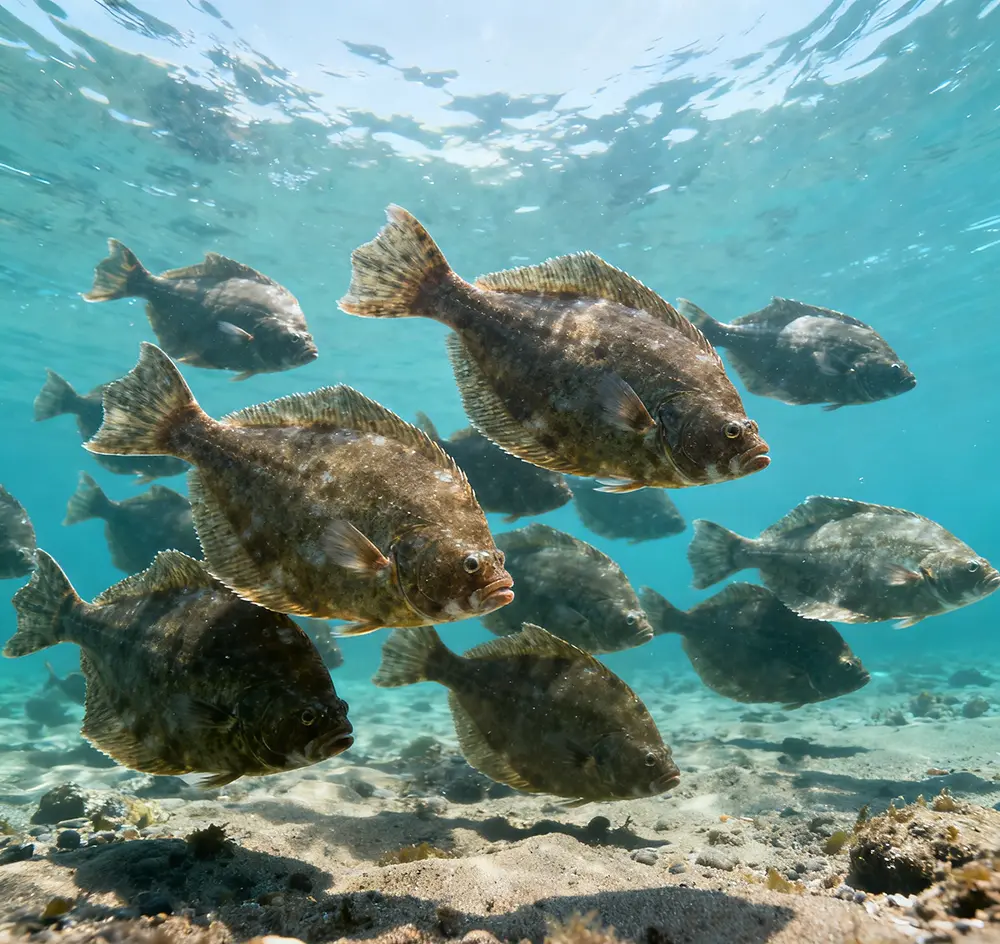
The commercial fishing season for Atlantic halibut is strictly regulated: the main fishing season in Norwegian waters is May–September; in Newfoundland, Canada, it is July–October; and Iceland implements a rotational fishing system. The best time to eat it is in summer, when the fat content of the flesh is moderate (about 3%); the meat quality is poorer during the winter spawning season. Farmed products are available year-round, but their flavor is inferior to that of wild-caught fish. Compared to herring, which has distinct seasonal variations, the meat quality of halibut remains relatively stable throughout the year, but the availability of wild individuals is strictly limited by quotas.
Atlantic halibut spoils very easily. Traditional preservation methods include: Icelandic drying (harðfiskur), salting (as in the Portuguese method), and smoking. Modern fishing vessels use ultra-low-temperature (–40°C) flash-freezing, which extends shelf life up to 12 months. Consumer purchasing tips: fresh fish should have bulging, clear eyes, bright red gills, and clear, translucent slime on the skin; frozen products should show no signs of freezer burn. For home storage, fresh fish can be kept at 0–2°C for no more than 2 days; frozen at –18°C, it can be stored for 3 months. Compared to mackerel, halibut has a longer shelf life but loses more moisture after thawing.
Atlantic halibut stocks were once nearly depleted due to overfishing by bottom trawlers; for example, the Newfoundland population declined by 95% in the 1990s. Current management measures include: quota systems (Norway's annual quota is approximately 20,000 tons), minimum mesh sizes (at least 120 mm), and protection of spawning grounds. MSC certification promotes sustainable fishing, and some Norwegian fisheries have now been certified. Aquaculture technology is still developing, with major bottlenecks including low juvenile survival rates (<10%) and="" long="" growth="" cycles="">
Atlantic halibut is a vital economic resource for Nordic countries; Iceland's "Cod Wars" (with the UK) expanded the concept of territorial waters, and the species has played a significant role in North Atlantic fisheries. Traditional industries include the dried halibut trade (to Southern Europe) and cod liver oil exports. Culturally, in Norwegian folklore, the halibut is regarded as the "mount of the sea god"; Indigenous peoples in eastern Canada consider it a sacred food. The global annual catch is approximately 30,000 tons, with Norway accounting for 60%, and prices remain high (whole fish dock prices range from approximately $8 to $12 per kilogram). Compared to the cod industry, the halibut industry chain is more high-end, with higher product value added.
Atlantic halibut aquaculture began in the 1990s, with primary production areas in Norway, Scotland, and Canada. Technological breakthroughs include: photoperiod regulation to induce early maturation, optimization of formulated feed (containing krill components), and selective breeding for disease resistance. Land-based recirculating aquaculture systems (RAS) reduce environmental impact but are costly (production costs of approximately $6–8 per kilogram). Future development directions include: marker-assisted breeding, deep-water cage farming, and polyculture (co-cultivation with seaweed). Compared to the already industrialized salmon farming sector, halibut farming remains small-scale (with an annual production of less than 10,000 tons), but it faces a significant market gap and holds substantial growth potential.
The Atlantic halibut (Atlantic Halibut), the largest species among flatfish, is renowned for its unique morphology and prized flesh.
Morphologically, its extremely laterally compressed body, unilateral eyes, and remarkable ability to change color are distinctive features that enable it to adapt to a benthic lifestyle. Ecologically, it is widely distributed in the cold waters of the North Atlantic; its predatory nature and slow growth and reproduction make it vulnerable to overfishing. In terms of edible value, its thick, tender white flesh is rich in high-quality protein and omega-3 fatty acids, but due to strict quota restrictions, wild stocks are scarce. When identifying the species, attention must be paid to the shape of the lateral line and body coloration to avoid confusion with cheaper flatfish varieties.
The fishing season is concentrated in summer, and preservation techniques are crucial for maintaining quality. In terms of resource management, countries enforce strict quotas and habitat protection; while aquaculture faces technical challenges, it represents an important avenue for alleviating pressure on wild stocks. Economically and culturally, halibut has profoundly influenced the fishing history of North Atlantic coastal nations, giving rise to unique culinary traditions. Future sustainable utilization requires balancing ecological conservation with industrial development, and technological innovation will be the key breakthrough.
Morphological data: FAO Species Identification Guide for Fishery Purposes
Ecology and distribution: ICES (International Council for the Exploration of the Sea) annual assessment reports
Nutritional analysis: Official nutritional tables from the Norwegian Seafood Council
Fisheries Management: NAFO (Northwest Atlantic Fisheries Organization) Management Plan
Aquaculture Techniques: Multiple studies published in *Aquaculture International*
Historical Data: Archival materials from Bjørn Basberg's *History of North Atlantic Fisheries*
Silver Cod Essentials: Form, Living Behavior, Taste, Types, and Peak Seasons
Home Back to ColumnHardhead Catfish Decoded: Morphology, Habits, Edible Value, Varieties, and Timing
 Swordfish: The Silver Blade of the Ocean
 Hardhead Catfish Decoded: Morphology, Habits, Edible Value, Varieties, and Timing
 Oysters: Living Filters of the Ocean
 On the Bamboo Clam: Morphology, Burrowing Habits, Edible Value, Species Diversity, and Seasonal Occu
 Comprehensive Study of the Giant Tiger Prawn (Penaeus monodon) in Indonesian Waters
Comprehensive Study of the Giant Tiger Prawn (Penaeus monodon) in Indonesian Waters
Oysters: Living Filters of the Ocean
Oysters: Living Filters of the Ocean
On the Bamboo Clam: Morphology, Burrowing Habits, Edible Value, Species Diversity, and Seasonal Occu
On the Bamboo Clam: Morphology, Burrowing Habits, Edible Value, Species Diversity, and Seasonal Occu
4Glass Catfish Unveiled: Morphological Traits, Daily Life, Ornamental Appeal, Strains, and Seasonal C
5Physical Characteristics of the Checkerboard Wrasse | Habits | Edible Value | Varieties | Seasonalit
6Bluefin Tuna: Biology and Fisheries Value of a Tropical Oceanic Wanderer
7Red Cod| Rockfish | Rosefish: Biology and Sustainable Utilization of a Deep-Sea Delicacy
8Moray eel | Eels—Muraenidae: The Secret Predators of the Abyss
9Greenland Shark: Physical Characteristics | Habits | Edible Value | Species Overview | Seasonality
10Hardhead Catfish Decoded: Morphology, Habits, Edible Value, Varieties, and Timing