Current location:首页 > Fish > Morphological Characteristics, Habits, Edible Value, Varieties, and Seasonality of the Yellow-Brown
The yellow-brown flatfish(黄褐扁鱼), scientific name Paralichthys lethostigma, is a
marine fish primarily found along the U.S. East Coast and in the Gulf of Mexico.
In different regions, it may have local nicknames such as “Flatfish” or
“Fluke.”
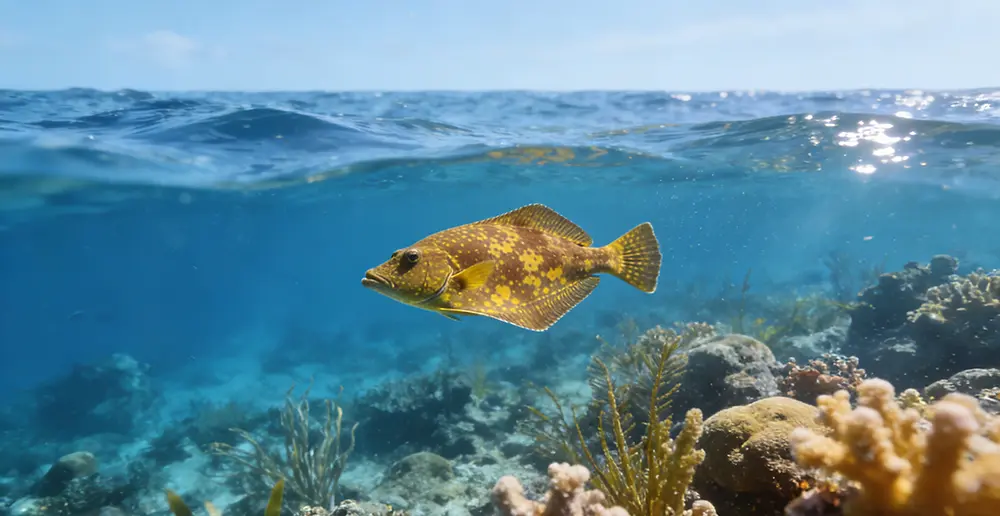
1. Flat Body: The yellow-brown flounder has a flat, oval-shaped body, which is highly adapted to a bottom-dwelling lifestyle.
2. Color: They are typically dark or light brown, sometimes with spots or stripes, allowing them to blend into their bottom habitats.
3. Eyes: The yellow-brown flounder has two eyes, both located on the same side of its body. This unique eye arrangement allows them to burrow into sandy or muddy bottoms while keeping one eye facing the water’s surface.
4. Fins: Yellow-brown flatfish have two dorsal fins, one on the side of the eye and the other on the opposite side of the back. Their dorsal fins usually feature black spots or markings.
5. Caudal fin: The caudal fin is wedge-shaped, aiding in rapid swimming through the water.
1. Benthic Lifestyle: They are bottom-dwelling fish that frequently burrow into sandy or muddy bottoms to evade predators and hunt for prey.
2. Nocturnal: Yellow-brown flatfish are generally more active at night and tend to hide on the bottom during the day. This nocturnal behavior helps them hunt small fish and crustaceans.
3. Diet: They primarily feed on small fish, insects, and crustaceans, using their retractable mouth to swallow prey.
4. Reproduction: During the breeding season, yellow-brown flatfish migrate to coastal waters, where females lay eggs and males release sperm. After fertilization, the eggs float in the water until they hatch.
Southern flounder is a popular edible fish, prized for its delicious meat. Their flesh is tender and has a rich, oceanic flavor, making it suitable for various cooking methods, including pan-frying, grilling, braising, and steaming. Southern flounder is rich in protein, vitamins, and minerals, making it a nutritious ingredient.
The Southern Flounder is a demersal fish found along the U.S. East Coast and in the Gulf of Mexico. Its range spans multiple states in North America, including Texas, Louisiana, Florida, and South Carolina. The Southern Flounder’s life is influenced by seasonal changes, such as shifts in temperature and food availability, leading to varying habits and behaviors throughout the year.
Spring:
Spring is a crucial season for the Southern Flounder. As air temperatures rise and water temperatures gradually warm, Southern Flounder become more active. They leave deeper waters and migrate toward nearshore areas in search of suitable spawning sites. In spring, female yellow-spotted flounders typically lay their eggs on sandy or muddy bottoms in nearshore waters, while males release sperm to fertilize the eggs. This process usually occurs when water temperatures rise to around 60 degrees Fahrenheit (approximately 15 degrees Celsius).
Summer:
Summer is the breeding season for yellow-brown flatfish. The eggs float in the water for a period until they hatch into fry. During this season, yellow-brown flatfish guard their eggs, ensuring they have sufficient oxygen and appropriate water temperatures for hatching. Females usually remain at the spawning site, while males may continue swimming in search of more females.
Fall:
Fall marks the growth phase for yellow-brown flatfish fry. After hatching, the fry gradually swim toward shallower waters in search of suitable feeding grounds. They typically find abundant food resources in these shallow areas, including small fish, insects, and crustaceans. This season is also a period of rapid growth for yellow-brown flatfish, during which they gain weight and length quickly.
Winter:
Winter is a relatively inactive season for yellow-brown flatfish. As water temperatures drop, they may choose to spend the cold season in deeper waters. During this period, their appetite may decrease, and their range of movement is restricted. However, in some warmer southern waters, they can still continue to forage.
The life habits and activities of yellow-brown flatfish are greatly influenced by seasonal factors. Spring is the peak breeding season, summer is the hatching and growth stage for juveniles, autumn is a period of foraging and growth for juveniles, and winter is a time of relatively low activity and reduced appetite. This seasonal adaptation allows yellow-brown flatfish to survive and reproduce under varying environmental conditions.
Physical Characteristics, Habits, Edible Value, Varieties, and Seasonality of the Golden Arowana
Home Back to ColumnGlass Catfish Unveiled: Morphological Traits, Daily Life, Ornamental Appeal, Strains, and Seasonal C
 Swordfish: The Silver Blade of the Ocean
 Hardhead Catfish Decoded: Morphology, Habits, Edible Value, Varieties, and Timing
 Oysters: Living Filters of the Ocean
 On the Bamboo Clam: Morphology, Burrowing Habits, Edible Value, Species Diversity, and Seasonal Occu
 Comprehensive Study of the Giant Tiger Prawn (Penaeus monodon) in Indonesian Waters
Comprehensive Study of the Giant Tiger Prawn (Penaeus monodon) in Indonesian Waters
Oysters: Living Filters of the Ocean
Oysters: Living Filters of the Ocean
On the Bamboo Clam: Morphology, Burrowing Habits, Edible Value, Species Diversity, and Seasonal Occu
On the Bamboo Clam: Morphology, Burrowing Habits, Edible Value, Species Diversity, and Seasonal Occu
4Glass Catfish Unveiled: Morphological Traits, Daily Life, Ornamental Appeal, Strains, and Seasonal C
5Physical Characteristics of the Checkerboard Wrasse | Habits | Edible Value | Varieties | Seasonalit
6Bluefin Tuna: Biology and Fisheries Value of a Tropical Oceanic Wanderer
7Red Cod| Rockfish | Rosefish: Biology and Sustainable Utilization of a Deep-Sea Delicacy
8Moray eel | Eels—Muraenidae: The Secret Predators of the Abyss
9Greenland Shark: Physical Characteristics | Habits | Edible Value | Species Overview | Seasonality
10Hardhead Catfish Decoded: Morphology, Habits, Edible Value, Varieties, and Timing