Current location:首页 > Fish > Hardhead Catfish Decoded: Morphology, Habits, Edible Value, Varieties, and Timing
The hardhead catfish (scientific name: *Ariopsis felis*; Chinese name: 大西洋鲶鱼), also known as the Atlantic wolf fish(大西洋狼鱼) or wolf eel(狼鳗), is primarily found in brackish water zones along the western Atlantic coast and in shallow coastal waters. It is a small-to-medium-sized, bottom-dwelling commercial fish species.
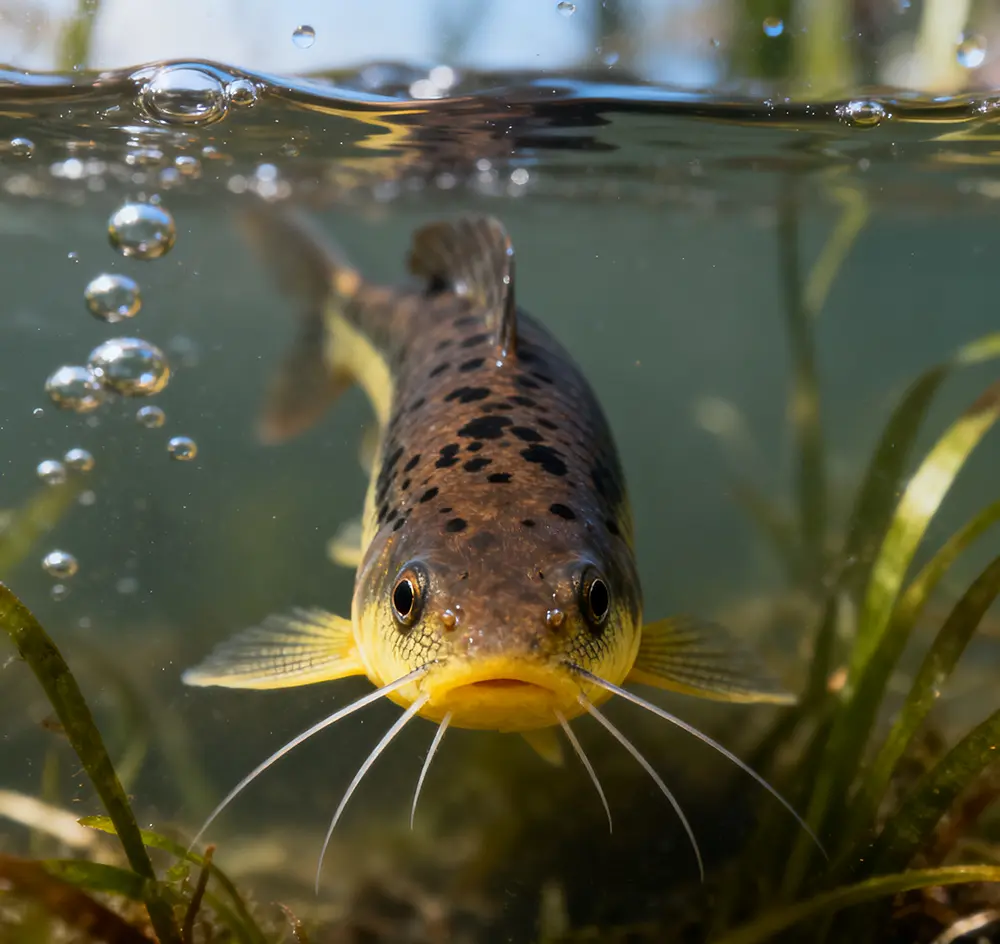
The hardhead catfish has a fusiform body, broad and thick anteriorly and laterally compressed posteriorly. Adult individuals average 30–45 cm in length, with the largest recorded specimen reaching 60 cm. The head is broad and flattened, with an inferior mouth and a protruding upper jaw lined with fine teeth. The most distinctive feature is the presence of three pairs of barbels around the mouth: one pair of maxillary barbels that are relatively long (reaching the base of the pectoral fins), and two pairs of mandibular barbels that are shorter. The dorsal fin is tall and features a serrated spine connected to a venom gland; the pectoral fins also possess venomous spines; the adipose fin is small; and the anal fin is long and low. The body is scaleless and covered with a thick layer of mucus, giving it a slippery texture. Compared to the blue catfish (*Ictalurus furcatus*), the hardhead catfish has a flatter head, sturdier pectoral spines, and a more deeply forked caudal fin.
The back ranges from grayish-blue to olive-brown, the belly is silvery-white, and the sides are often scattered with black, cloud-like markings. Juveniles have lighter coloration with less distinct markings, which gradually darken with age. The skin is rich in mucous cells, and the secreted mucus serves antibacterial and friction-reducing functions. Under stress, mucus secretion increases dramatically, forming a protective coating. Compared to the brown bullhead (*Ameiurus nebulosus*), the hardhead catfish has a more bluish-gray body color, more irregular markings, and thicker mucus.
The first rays of the dorsal and pectoral fins are specialized into hollow venomous spines, connected at the base to venom gland tissue. When the spine pierces a predator, venom is injected through lateral grooves at the tip. The venom primarily consists of hemolytic proteins and neurotoxins, causing severe pain and localized swelling. Fishermen are often stung while handling the fish and must immediately soak the affected area in hot water above 45°C to neutralize the venom. Unlike the spines of lionfish, the hardhead catfish's spines are thicker and shorter, and the venom's effects last for a shorter duration (typically subsiding within 2–3 hours).
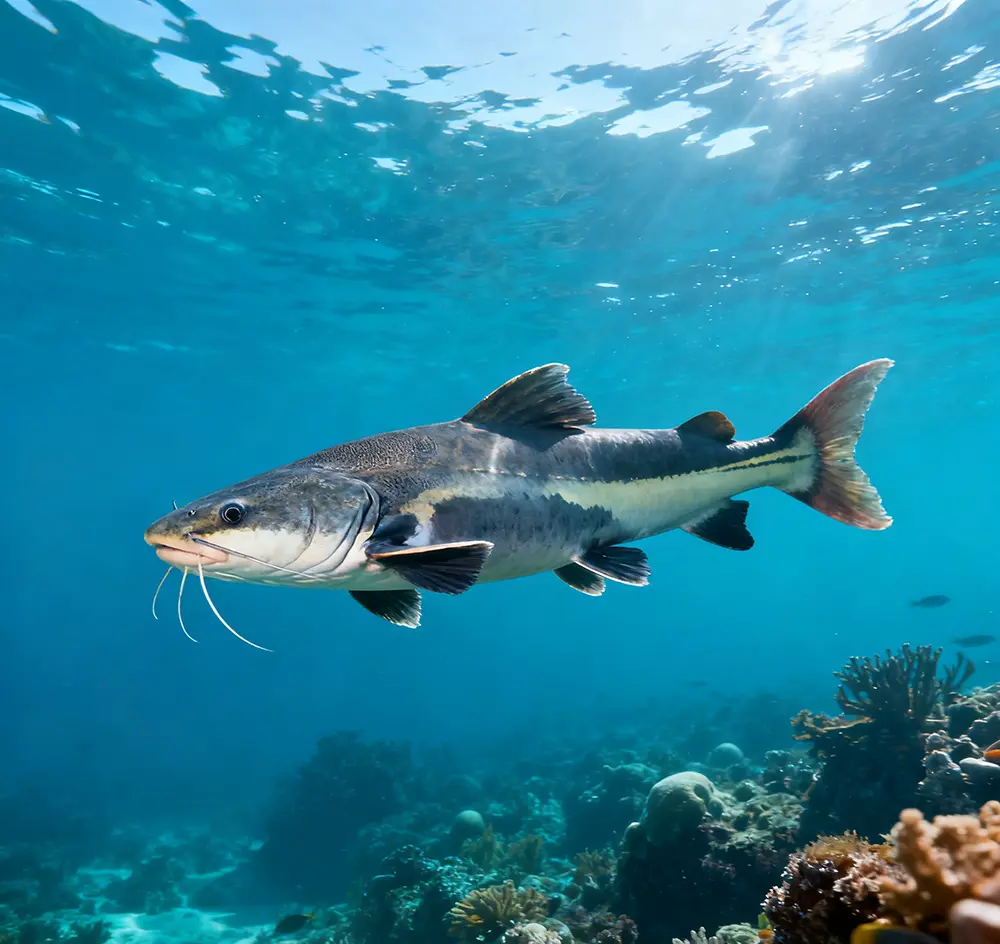
The hardhead catfish is concentrated in the western Atlantic, ranging from Massachusetts, USA, to the Gulf of Mexico coast, extending to northeastern Brazil. Typical habitats include estuarine mangroves, seagrass beds, and sandy-muddy shallow waters (1–50 m deep), with a wide salinity tolerance range (5–35‰). They migrate upstream into estuaries during summer and retreat to deeper waters in winter. They can tolerate low-oxygen environments (as low as 2 mg/L) and often gather at the water's surface to breathe in anoxic waters. Compared to the co-occurring gafftopsail catfish (*Bagre marinus*), the hardhead catfish prefers lower salinity environments and inhabits shallower depths.
Omnivorous with a carnivorous bias, its diet includes polychaete worms, crustaceans (shrimp, crabs), small fish, organic detritus, and even algae. It uses its barbels to detect prey in the sediment and is active at night. A unique protrusible upper jaw mechanism allows it to instantly suck in prey within 10 cm; its stomach capacity can reach up to 15% of its body weight. Compared to the red drum (*Sciaenops ocellatus*), the hardhead catfish exhibits stronger scavenging tendencies and demonstrates higher digestive efficiency when consuming decaying matter.
The breeding season occurs from May to August, with group spawning taking place at water temperatures of 22–28°C. Males exhibit a unique mouthbrooding behavior: after the female lays a sticky egg mass (4–5 mm in diameter), the male takes it into his mouth to fertilize it, incubating it there for approximately 30 days. Newly hatched fry, measuring about 1 cm in length, remain in the male's mouth for two weeks, where they can quickly take refuge in case of danger. The survival rate of fry reaches up to 70%, far exceeding that of most marine fish. Unlike tilapia, male hardhead catfish fast completely during the incubation period, and their lower jaw has evolved a specialized groove to secure the egg mass.
The flesh is tender but has a high water content (approximately 80%), moderate protein content (16–18 g per 100 g), and low fat content (<2 g="">
In traditional Southern U.S. cuisine, it is commonly smoked or fried: smoking neutralizes the muddy odor, while frying requires removing the head (to avoid contamination from the venom glands). In the Caribbean, "catfish soup" is popular, simmered with coconut milk and chili peppers. The flesh falls apart easily and is not suitable for steaming, but it can be processed into surimi products. The flavor is mild and slightly sweet, but with a faintly bitter aftertaste that requires bold seasoning to mask. Compared to yellowfin tuna, its flesh has shorter fibers and a lower fat content, making it suitable for those who prefer a lighter fish.
Two major risks require caution: first, poisoning from improper handling of venomous spines (professional removal is recommended); second, fishing is prohibited in certain waters of Florida due to industrial pollution (particularly the Indian River Lagoon). Regarding religious dietary restrictions, Judaism and Islam consider it a "scaleless fish" and prohibit its consumption. Commercial fishing must comply with minimum size limits (most states require a body length >30 cm), and fishing is prohibited in some protected areas during the spawning season (May–July).
The genus *Ariopsis* includes four species: in addition to the hardhead catfish, common species include the gafftopsail catfish (*Bagre marinus*, with long filamentous extensions on the dorsal fin) and the Bonilla sea catfish (*Ariopsis bonillai*, with golden longitudinal bands on the sides). Freshwater hybrid catfish (e.g., blue catfish × channel catfish) are commonly confused with this species in the market. Key distinguishing features: the hardhead catfish has a black circular spot on the posterior edge of the gill cover and no adipose fin protrusion on the caudal peduncle; freshwater species have larger eyes and thicker, shorter barbels.
Common substitutes include:
- Swai (*Pangasius*): whiter flesh with distinct intermuscular fat lines;
- Pike eel (*Muraenesox*): snake-like body shape, no barbels;
- Croakers (*Sciaenidae*): possess a swim bladder used for sound production and have firmer, more resilient flesh.
There is a significant price difference: hardhead catfish sells for approximately $1–2 per kilogram at the dock, while croakers reach $5–8. In processed products, catfish meat is often cut into blocks and frozen; it has a looser texture and tends to release water easily upon thawing.

Commercial fishing is concentrated in September–November (after juveniles leave their nests) and February–April (the fattening period before winter). Fishing is prohibited in summer due to the spawning season, while winter fishing is inefficient because the fish disperse. The optimal time for consumption is in the fall, when fat content peaks (approximately 3%) and the flesh is firmest. Populations in estuaries are highly influenced by rainfall: during the dry season, high salinity makes the flesh taste saltier; during the rainy season, the muddy flavor intensifies. Unlike cod, which can be caught year-round, the wild supply of hardhead catfish exhibits significant seasonal fluctuations.
On board, the fish must be quickly decapitated and bled (to prevent venom from contaminating the flesh) and preserved in a mixture of ice and salt (0–2°C). Because the flesh spoils easily, 60% of the catch is processed immediately: - Salted and dried products (Caribbean tradition): heavily salted and sun-dried, with a shelf life of 1 year; - Smoked products (Southern U.S.): cold-smoked with fruitwood for 8 hours to impart a smoky flavor; - Surimi products (Southeast Asia): mixed with starch to make fish balls. When purchasing fresh fish, consumers should check for bright red gills and firm barbels; avoid repeatedly thawing frozen products.
As "sea floor scavengers," hardhead catfish consume large amounts of detritus, helping maintain ecological balance in estuaries. However, overfishing threatens populations: in some areas of the Gulf of Mexico, populations declined by 70% between 1980 and 2010. Conservation measures include: - establishing buoy-marked protected spawning grounds (e.g., the Mississippi River estuary); - promoting the use of gillnets as an alternative fishing method (to reduce bycatch of juveniles); - minimum mesh size restrictions (≥10 cm). The IUCN lists it as "Least Concern," but local populations require monitoring.
Annual catch in the U.S. Gulf of Mexico is approximately 15,000 metric tons, supporting small-scale fishing communities. In Louisiana, an annual "Catfish Festival" is held, featuring fried catfish served with cornmeal batter. Culturally, African Americans regard it as the "fish of freedom," a tradition stemming from the slave era when catfish were caught to supplement nutrition. In the processing industry, the skin is used for leather (with 60% of the abrasion resistance of cowhide), and the bones are used to extract gelatin. Compared to high-end commercial fish species, catfish have a lower unit price but a larger total volume, making them an important source of protein for the general public.
Aquaculture trials began in the 2000s, with the main challenges being:
1. Fry require live feed (*Artemia*), which accounts for 40% of production costs;
2. Mouthbrooding behavior results in an artificial hatching rate of<30%;>
3. Sudden changes in salinity easily trigger parasitic infections (such as *Cryptocaryon*).
Recent breakthroughs include the development of microdiets to replace live feed and the use of recirculating aquaculture systems to control gradual salinity changes. Commercial farming has begun in Honduras, with an annual output of approximately 2,000 tons, though the flavor is inferior to that of wild populations.
The hardhead catfish (*Ariopsis felis*) is a demersal fish endemic to the western Atlantic, known for its tolerance of low-salinity environments and unique mouthbrooding reproductive behavior.
Morphologically, its three pairs of barbels, scaleless mucous layer, and venomous fin spines are typical identifying characteristics. In terms of behavior, it is widely found in shallow estuarine waters; its omnivorous diet and strong adaptability make it an "ecological scavenger." As a food source, its flesh is tender but requires careful preparation to remove the venom glands and eliminate the muddy odor; it holds an important place in the culinary culture of the southern United States and the Caribbean. Species identification requires attention to the shape of the dorsal fin and lateral markings to avoid confusion with freshwater catfish. Seasonal fishing is concentrated in spring and autumn, and preservation and processing techniques directly impact product quality.
Although global stocks remain stable, local populations face pressure due to habitat degradation and require protection through a network of reserves and regulated fishing practices. Economically, it is a vital resource for coastal communities, with significant potential for the development of byproducts such as fish skin. Although aquaculture is still in its infancy, technological innovations are expected to alleviate pressure on wild stocks. Future management must balance ecological functions with sustainable use, with particular attention to the risk of pollutant accumulation along the food chain.
Morphological data: Smithsonian Institution, *Fishes of the Western Atlantic*, Vol. 5
Ecology: NOAA (National Oceanic and Atmospheric Administration), Gulf of Mexico Ecological Report
Toxicological Studies: Clinical Analysis of Sting Injuries, *Journal of Wilderness Medicine*
Reproductive Biology: Study on Mouthbrooding Behavior, *Aquaculture* (2018)
Resource Assessment: Annual Report of the Gulf States Marine Fisheries Commission
Aquaculture Techniques: Proceedings of the World Aquaculture Society Conference (2021)
The Atlantic Halibut (Hippoglossus hippoglossus): From Benthic Biology to Seasonal Cuisine
Home Back to Column Swordfish: The Silver Blade of the Ocean
Hardhead Catfish Decoded: Morphology, Habits, Edible Value, Varieties, and Timing
 Oysters: Living Filters of the Ocean
 On the Bamboo Clam: Morphology, Burrowing Habits, Edible Value, Species Diversity, and Seasonal Occu
 Comprehensive Study of the Giant Tiger Prawn (Penaeus monodon) in Indonesian Waters
Comprehensive Study of the Giant Tiger Prawn (Penaeus monodon) in Indonesian Waters
Oysters: Living Filters of the Ocean
Oysters: Living Filters of the Ocean
 A Comprehensive Analysis of the Indonesian White Prawn (Penaeus merguiensis)
A Comprehensive Analysis of the Indonesian White Prawn (Penaeus merguiensis)
4Glass Catfish Unveiled: Morphological Traits, Daily Life, Ornamental Appeal, Strains, and Seasonal C
5Physical Characteristics of the Checkerboard Wrasse | Habits | Edible Value | Varieties | Seasonalit
6Bluefin Tuna: Biology and Fisheries Value of a Tropical Oceanic Wanderer
7Red Cod| Rockfish | Rosefish: Biology and Sustainable Utilization of a Deep-Sea Delicacy
8Moray eel | Eels—Muraenidae: The Secret Predators of the Abyss
9Greenland Shark: Physical Characteristics | Habits | Edible Value | Species Overview | Seasonality
10Hardhead Catfish Decoded: Morphology, Habits, Edible Value, Varieties, and Timing